Inventory mismanagement is one of the silent profit killers for fashion and e-commerce businesses. Stockouts can cost you lost sales and frustrated customers, while overstock ties up cash and increases storage costs. According to industry reports, retailers lose up to 10% of potential revenue annually due to inventory inefficiencies, and fashion brands often face an additional challenge: seasonal trends that make demand unpredictable.
A Periodic Inventory Replenishment (PIR) system offers a practical solution. Instead of continuously tracking every SKU in real-time, PIR relies on scheduled reviews—weekly, bi-weekly, or monthly—to evaluate stock levels and determine replenishment needs.
In this guide, we’ll take you through a step-by-step blueprint for implementing a PIR system, tailored specifically for fashion and e-commerce brands. You’ll learn how to:
- Segment your inventory for smarter replenishment.
- Determine optimal review periods and reorder quantities.
- Integrate PIR with suppliers and multi-warehouse operations.
- Avoid common pitfalls that cause stockouts or overstock.
- Use automation tools to make replenishment efficient and data-driven.
Unsure about your
replenishment approach?
Avoid Stockouts surplus with —
Real-Time alerts & smarter forecasts.
Start for Free →
No credit/debit card required • Cancel anytime
What is a Periodic Inventory Replenishment (PIR) System?
A Periodic Inventory Replenishment (PIR) system is an inventory management approach where stock levels are reviewed at fixed intervals—such as weekly, bi-weekly, or monthly—and replenishment orders are made based on current inventory and expected demand. Unlike continuous replenishment systems, PIR does not track inventory in real time; instead, it relies on scheduled reviews and historical sales data to determine what to reorder and in what quantity.
Core Components of a PIR System
- Review Period (Cycle Time)
The interval at which inventory is checked and orders are triggered. This can vary by SKU type, demand pattern, or warehouse. Fast-moving items may require weekly reviews, while slow-moving accessories can be checked monthly. - Reorder Quantity
The amount of stock ordered to bring inventory back to the desired level. This is typically calculated using historical sales, expected demand, and safety stock. - Safety Stock
A buffer quantity maintained to absorb demand fluctuations or supply delays, ensuring that high-demand items remain available even if sales spike unexpectedly. - Replenishment Order
The actual purchase order sent to suppliers based on the review and calculations above.
How PIR Differs from Other Replenishment Systems
System
Tracking
Order Trigger
Ideal For
PIR
Periodic (fixed intervals)
Scheduled review
Seasonal items, fashion basics, slow/medium-moving SKUs
Continuous Replenishment
Real-time
Stock reaches reorder point
High-volume fast-moving items, just-in-time operations
Just-in-Time (JIT)
Real-time
Demand-driven
Lean manufacturing, precise supply chain
Why PIR Works Well for Fashion & E-commerce
- Simplifies multi-warehouse management: Allows brands to consolidate replenishment decisions across locations.
- Balances cash flow: Avoids over-purchasing while keeping stock available.
- Handles seasonal fluctuations: Fixed review cycles allow brands to plan for trends, collections, and campaigns.
- Reduces manual monitoring: Especially useful for businesses with hundreds or thousands of SKUs.
Example:
A fashion retailer sells 1,000 basic t-shirts per month across three warehouses. Instead of continuously monitoring stock, the company reviews inventory every two weeks. Based on sales velocity, current stock, and safety stock, it places replenishment orders to maintain stock levels. This ensures popular SKUs are always available while reducing excess inventory in slow-moving styles.
When Periodic Replenishment Works Best
A Periodic Inventory Replenishment (PIR) system isn’t a one-size-fits-all solution. Its effectiveness depends on the type of products, demand patterns, and operational setup. Implementing PIR in the right context ensures optimal stock levels, reduced waste, and improved cash flow.
1. Products with Predictable or Moderate Demand
PIR works best for SKUs whose demand is relatively consistent or moderately variable. Examples in fashion and e-commerce:
- Everyday basics (e.g., plain t-shirts, socks, leggings)
- Essential accessories (e.g., belts, scarves)
- Replenishable beauty or lifestyle products
Because demand is predictable, reviewing inventory periodically and ordering based on historical sales is sufficient, avoiding the complexity of real-time tracking.
2. Seasonal or Trend-Based Products
For seasonal collections, PIR allows brands to align replenishment cycles with campaign schedules:
- Summer/winter collections
- Holiday promotions or limited editions
- Fashion capsule collections
By planning replenishment at set intervals, brands can avoid overstocking seasonal items and ensure stock availability during peak sales periods.
3. Multi-Warehouse or Multi-Location Operations
Brands operating across multiple warehouses benefit from PIR because:
- Stock can be reviewed and replenished across locations simultaneously.
- Orders can be consolidated to optimize supplier shipments.
- Inventory visibility improves without requiring continuous monitoring of every SKU.
Example:
A retailer with three warehouses conducts bi-weekly reviews. Based on stock levels and sales velocity, it sends replenishment orders to each warehouse to maintain consistent product availability without overstocking in any single location.
4. Low to Medium-Sales Volume SKUs
For slow-moving items or SKUs with lower turnover, PIR prevents unnecessary over-ordering:
- Accessories like handbags, jewelry, or niche apparel sizes
- Products with infrequent sales spikes
These SKUs don’t need constant monitoring; a periodic review ensures inventory is replenished only when necessary, freeing up cash and storage space.
5. When Supplier Lead Times Are Reliable
PIR assumes stock can be replenished on a predictable schedule. It works best when suppliers:
- Deliver consistently within agreed lead times
- Can accommodate batch orders at regular intervals
Unreliable suppliers or frequent delivery delays reduce the effectiveness of PIR, which could result in stockouts.
Key Takeaway:
PIR delivers maximum value when inventory has predictable patterns, moderate-to-low turnover, seasonal trends, or is distributed across multiple warehouses. For fast-moving, unpredictable SKUs, combining PIR with continuous monitoring or safety stock strategies ensures brands maintain stock without over-investing
Critical Metrics You Must Track Before Implementing PIR
Before implementing a Periodic Inventory Replenishment (PIR) system, tracking the right metrics is crucial. Without this data, replenishment decisions can lead to stockouts, overstocks, and lost revenue.
1. Sales Velocity per SKU (Fast vs. Slow Movers)
Definition: Sales velocity measures how quickly a product sells over a given period.
Why it matters:
- Determines how often a SKU should be reviewed.
- Helps classify SKUs into fast, medium, or slow movers, guiding review frequency and order quantity.
Formula:
Sales Velocity = Units Sold ÷ Number of Days in Period
Example:
A fashion brand sells 600 t-shirts in a month:
600 ÷ 30 = 20 units/day
- Fast movers (20+ units/day) → weekly review
- Medium movers (5–20 units/day) → bi-weekly review
- Slow movers (<5 units/day) → monthly review
2. Lead Time Accuracy from Suppliers
Definition: Lead time is the time between placing an order and receiving stock. Lead time accuracy measures how reliably suppliers meet promised delivery dates.
Why it matters:
- PIR relies on scheduled reviews; inaccurate lead times can cause stockouts.
- Helps determine safety stock and reorder points.
Formula:
Lead Time Accuracy (%) = (Orders Delivered On Time ÷ Total Orders) × 100
Example:
If a supplier delivers 18 out of 20 orders on time:
18 ÷ 20 × 100 = 90
- High accuracy → fewer buffers needed
- Low accuracy → increase safety stock or adjust review frequency
3. Safety Stock Calculation for Seasonal Spikes
Definition: Safety stock is the buffer inventory kept to prevent stockouts during unexpected demand surges or supply delays.
Why it matters:
- Protects against demand spikes during seasonal trends or promotions.
- Ensures high-demand SKUs remain available.
Formula:
Safety Stock = Average Daily Sales × Lead Time Variability
Example:
- Average daily sales of a winter jacket = 10 units/day
- Lead time variability = 5 days
Safety Stock = 10 × 5 = 50 units
4. Inventory Turnover and Days of Inventory (DOI)
Definition:
- Inventory Turnover: Measures how many times inventory is sold and replaced over a period.
- Days of Inventory (DOI): Average number of days it takes to sell current stock.
Why it matters:
- Indicates SKU performance and replenishment frequency.
- Helps avoid overstock of slow-moving items and ensures fast movers are always available.
Formulas:
Inventory Turnover = Cost of Goods Sold (COGS) ÷ Average Inventory
Days of Inventory (DOI) = Average Inventory ÷ Daily Sales
Example:
- Average inventory of t-shirts = 1,000 units
- Monthly sales = 2,000 units
Inventory Turnover = 2,000 ÷ 1,000 = 2 times/month
DOI = 1,000 ÷ (2,000 ÷ 30) = 15 days
- High turnover, low DOI → review inventory more frequently
- Low turnover, high DOI → less frequent reviews, smaller replenishment orders
Key Takeaway:
Tracking these metrics ensures your PIR system is data-driven, precise, and scalable. For fashion and e-commerce brands, this means:
- Popular items remain in stock
- Slow-moving SKUs don’t occupy excess warehouse space
- Seasonal spikes are managed effectively
Step-by-Step Implementation Blueprint for PIR
Implementing a Periodic Inventory Replenishment (PIR) system requires careful planning and execution. Follow these steps to ensure your inventory is optimized for sales, storage costs, and cash flow.
Step 1: Segment Your Inventory for PIR
Purpose: Not all SKUs should follow the same review cycle. Segmenting your inventory ensures that high-demand items are replenished more frequently, while slow-moving SKUs are checked less often.
How to do it:
- Classify SKUs based on sales velocity (fast, medium, slow).
- Consider profitability and seasonality for prioritization.
- Assign review periods based on category:
- Fast movers → weekly
- Medium movers → bi-weekly
- Slow movers → monthly
Example:
- A fashion retailer sells t-shirts, scarves, and handbags.
- T-shirts (fast-moving) → weekly review
- Scarves (medium) → bi-weekly review
- Handbags (slow) → monthly review
Outcome: Efficient allocation of time and resources; critical SKUs are monitored more closely, reducing stockouts
Step 2: Define Review Periods That Make Sense for Your Business
Purpose: The review period determines how often inventory is evaluated and replenishment decisions are made. Choosing the right interval balances operational effort with stock availability.
How to decide:
- Analyze sales velocity, lead time, and SKU type.
- Align review frequency with supplier delivery schedules.
- Consider multi-warehouse operations; review periods may differ per location.
Example:
- A retailer with two warehouses:
- Warehouse A (urban, high sales) → weekly review for fast movers
- Warehouse B (suburban, moderate sales) → bi-weekly review for same SKUs
Tip: For seasonal products, align review cycles with promotional campaigns or peak demand periods.
Unsure about your
replenishment approach?
Avoid Stockouts surplus with —
Real-Time alerts & smarter forecasts.
Start for Free →
No credit/debit card required • Cancel anytime
Step 3: Calculate Replenishment Quantities Accurately
Purpose: Determine how many units to order each cycle to restore stock to desired levels without overstocking.
How to calculate:
- Determine average sales during the review period.
- Add safety stock to cover variability in demand or lead time.
Formula (plain text):
Replenishment Quantity = (Average Daily Sales × Review Period Days) + Safety Stock
Example:
- Average daily sales of a winter jacket = 10 units/day
- Review period = 14 days (bi-weekly)
- Safety stock = 50 units
Replenishment Quantity = (10 × 14) + 50 = 190 units
Outcome: Stock is replenished at the right level every cycle, minimizing both stockouts and excess inventory.
Step 4: Integrate PIR with Your Supply Chain
Purpose: Ensure that replenishment decisions align with supplier lead times, order minimums, and multi-warehouse operations. Integration prevents stockouts and optimizes order efficiency.
How to do it:
- Align review cycles with supplier delivery schedules.
- Factor in minimum order quantities (MOQ) to avoid excess stock.
- Coordinate between warehouses to balance stock and reduce holding costs.
Example:
- A fashion brand orders t-shirts from a supplier with a 7-day lead time.
- PIR review cycle = 14 days
- MOQ = 200 units
Replenishment orders are scheduled every 14 days, ensuring each warehouse receives the right quantity without overstocking.
Tip: For multi-warehouse operations, prioritize fast-moving SKUs at high-demand locations while maintaining minimum stock in secondary locations.
Step 5: Automate Tracking and Reporting
Purpose: Reduce manual errors and make PIR scalable and efficient. Automation ensures you get timely alerts and accurate inventory data.
How to do it:
- Use inventory management software to track SKU-level stock.
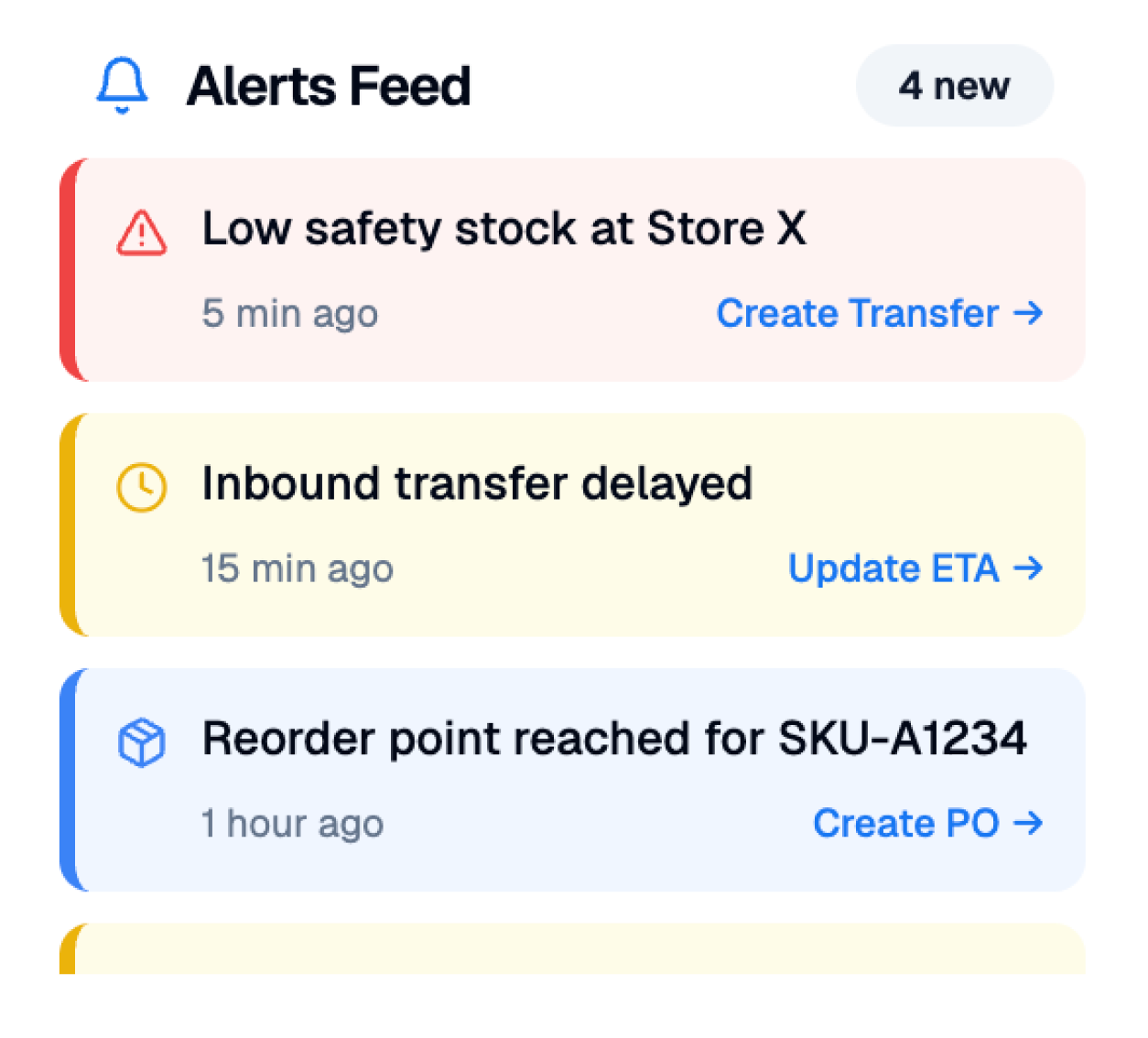
- Generate automated replenishment alerts based on review cycles and reorder quantities.
- Integrate sales and warehouse data for real-time visibility during periodic reviews.
Example:
- Using a tool like EasyReplenish, the system calculates replenishment quantities for 500 SKUs across 3 warehouses and generates purchase orders automatically every 2 weeks.
Outcome: Saves time, minimizes human error, and ensures timely replenishment without constant manual monitoring.
Step 6: Pilot, Measure, and Adjust
Purpose: Test the PIR system on a subset of SKUs before rolling it out across your entire inventory. Piloting helps identify bottlenecks, adjust review cycles, and fine-tune replenishment quantities.
How to do it:
- Select 10–20 SKUs representing fast, medium, and slow movers.
- Implement PIR for 1–2 review cycles.
- Track key metrics:
- Stockouts
- Overstock levels
- Inventory turnover
- Adjust review periods, safety stock, or reorder quantities based on results.
Example:
- Pilot with 15 SKUs:
- Initial replenishment quantities led to minor overstock for slow movers.
- Adjusted review period from bi-weekly → monthly for those SKUs.
- Result: Reduced excess stock by 20% without affecting availability.
Tip: Continuous monitoring and refinement are critical, especially during seasonal sales or promotional events.
Advanced Techniques to Optimize PIR
Once your Periodic Inventory Replenishment (PIR) system is in place, these advanced strategies can help you fine-tune the process, reduce errors, and align inventory with real-world demand patterns
1. Rolling Review Periods vs. Fixed Intervals
- Fixed intervals: PIR reviews happen at set periods (weekly, bi-weekly, monthly). Simple but can lead to stockouts if demand spikes between cycles.
- Rolling review periods: Review cycles shift dynamically based on sales trends or inventory thresholds.
Benefit: Ensures fast-moving SKUs are replenished promptly without constant monitoring.
Example:
- A fashion brand tracks high-demand jackets during winter. If sales exceed forecast, the system triggers a review sooner than the scheduled bi-weekly cycle, preventing stockouts.
2. Combine PIR with ABC Analysis
- ABC Analysis classifies SKUs based on sales value and volume:
- A items: High-value, fast movers → frequent reviews
- B items: Moderate value → bi-weekly or monthly reviews
- C items: Low-value, slow movers → monthly or quarterly reviews
- Benefit: Prioritizes resources and replenishment efforts on SKUs that impact revenue most.
Example:
- A retailer selling 500 SKUs:
- Top 50 SKUs (A) → weekly review
- Next 150 SKUs (B) → bi-weekly review
- Remaining 300 SKUs (C) → monthly review
3. Predictive Analytics for Smarter Replenishment
- Use historical sales, seasonal trends, and marketing campaigns to forecast demand more accurately.
- Adjust replenishment quantities and review cycles based on predictive insights rather than static averages.
Example:
- Using predictive analytics, a brand anticipates a spike in sunglasses sales before summer. PIR orders are increased proactively during May, avoiding stockouts in June.
4. Adjust Replenishment Based on Real-Time E-commerce Trends
- Even though PIR is periodic, you can integrate real-time e-commerce data to tweak replenishment quantities.
- Monitor online sales, trending SKUs, and flash sales to temporarily increase stock for fast-moving items.
Example:
- A trending hoodie gains sudden popularity on social media. While PIR reviews weekly, the replenishment order is increased mid-cycle based on sales alerts from the online store.
5. Optimize Multi-Warehouse PIR
- Synchronize PIR across multiple locations to avoid overstocking in one warehouse and stockouts in another.
- Allocate replenishment quantities based on warehouse demand, sales velocity, and shipping times.
Example:
- A retailer with 3 warehouses allocates fast-moving t-shirts based on local demand: 50% to urban warehouse, 30% to suburban, 20% to rural, reducing holding costs and stockouts.
Conclusion
Implementing a Periodic Inventory Replenishment (PIR) system is more than just a method of restocking—it’s a strategic approach that optimizes inventory, reduces costs, and improves customer satisfaction. By segmenting SKUs, defining appropriate review cycles, calculating replenishment quantities accurately, and integrating with suppliers and multi-warehouse operations, businesses can achieve a balance between stock availability and operational efficiency.
Final Thought: Start small by piloting PIR with key SKUs, measure the results, and refine your process. With continuous monitoring and strategic adjustments, PIR can transform inventory management from a reactive task into a powerful lever for growth and profitability.
Unsure about your
replenishment approach?
Avoid Stockouts surplus with —
Real-Time alerts & smarter forecasts.
Start for Free →
No credit/debit card required • Cancel anytime









.png)