
How Demand Forecasting Works for Fashion
E-commerce
Sales move in seasonal waves, but demand fluctuates sharply during festive and promotional periods like Diwali, Black Friday, and Christmas. Hence, the practical goal should be:




Reduction in
Stockouts
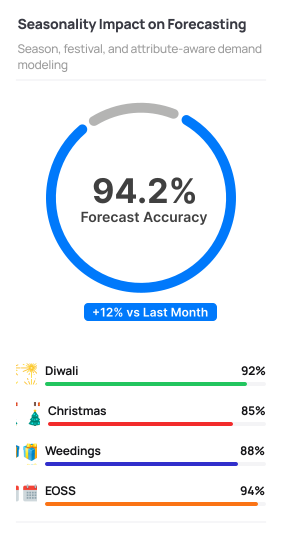
Improvement in Forecast Accuracy
Bestsellers from
New Launches
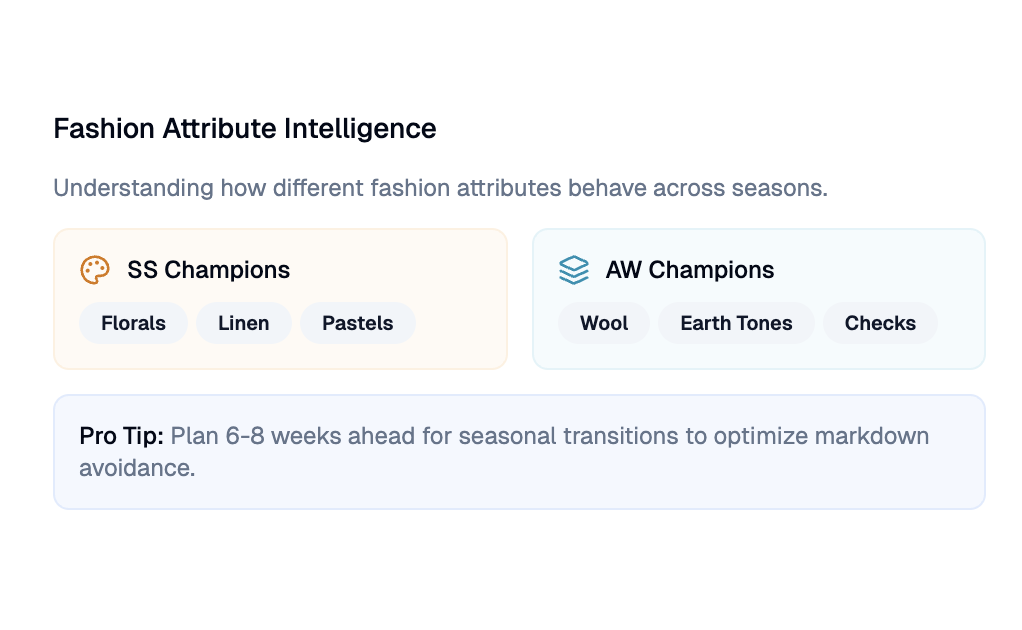
Attributes based
Seasonal Cohorts
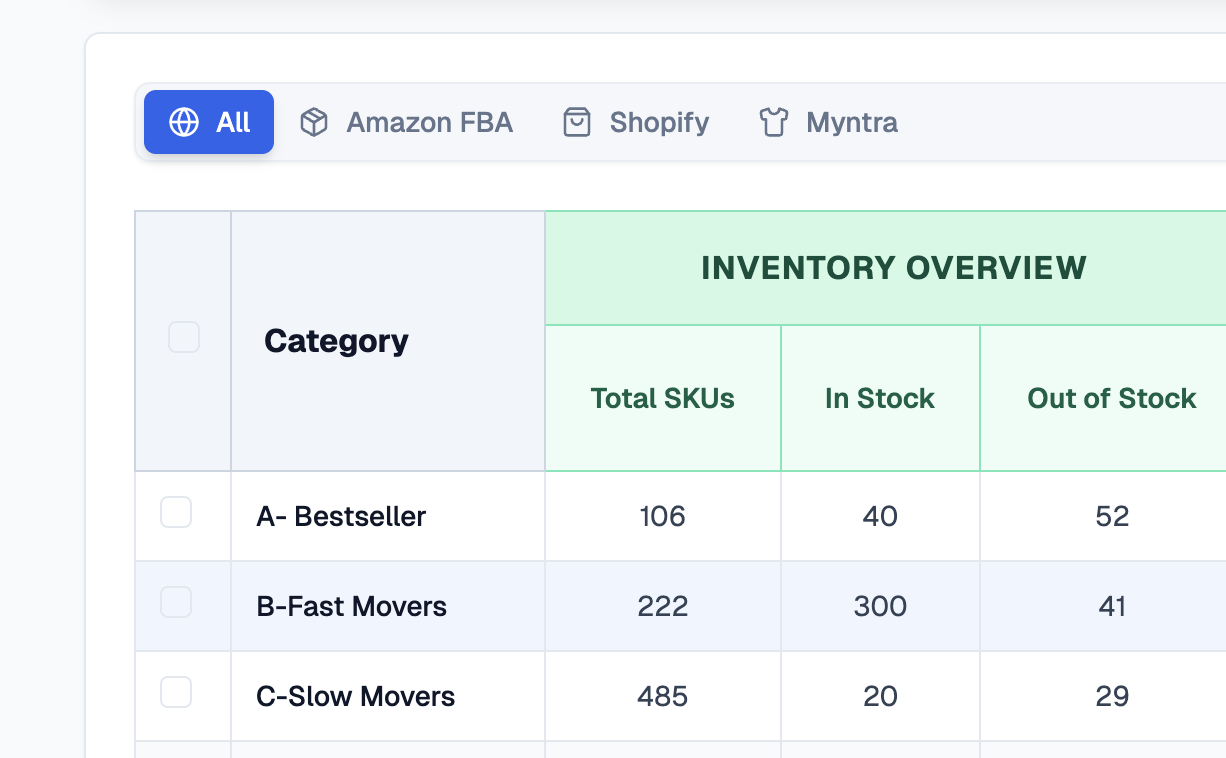
Step 1. Style Level ABCN Classification
Step 2. Reorder Logic
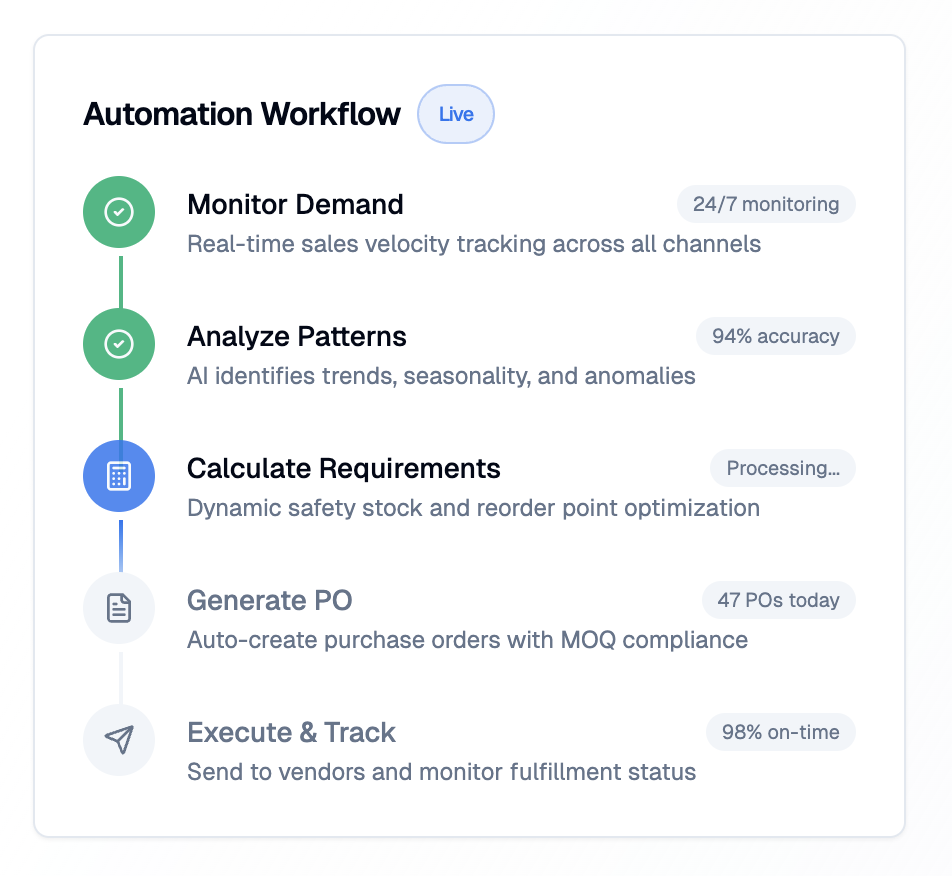
Uses in-stock sales velocity instead of calendar-day averages
Calculates reorder quantities using dynamic velocity, inventory position, safety stock, and seasonality inputs
Estimates reorder quantities specifically for upcoming promotional periods, not regular demand
Step 3. Seasonality Factoring
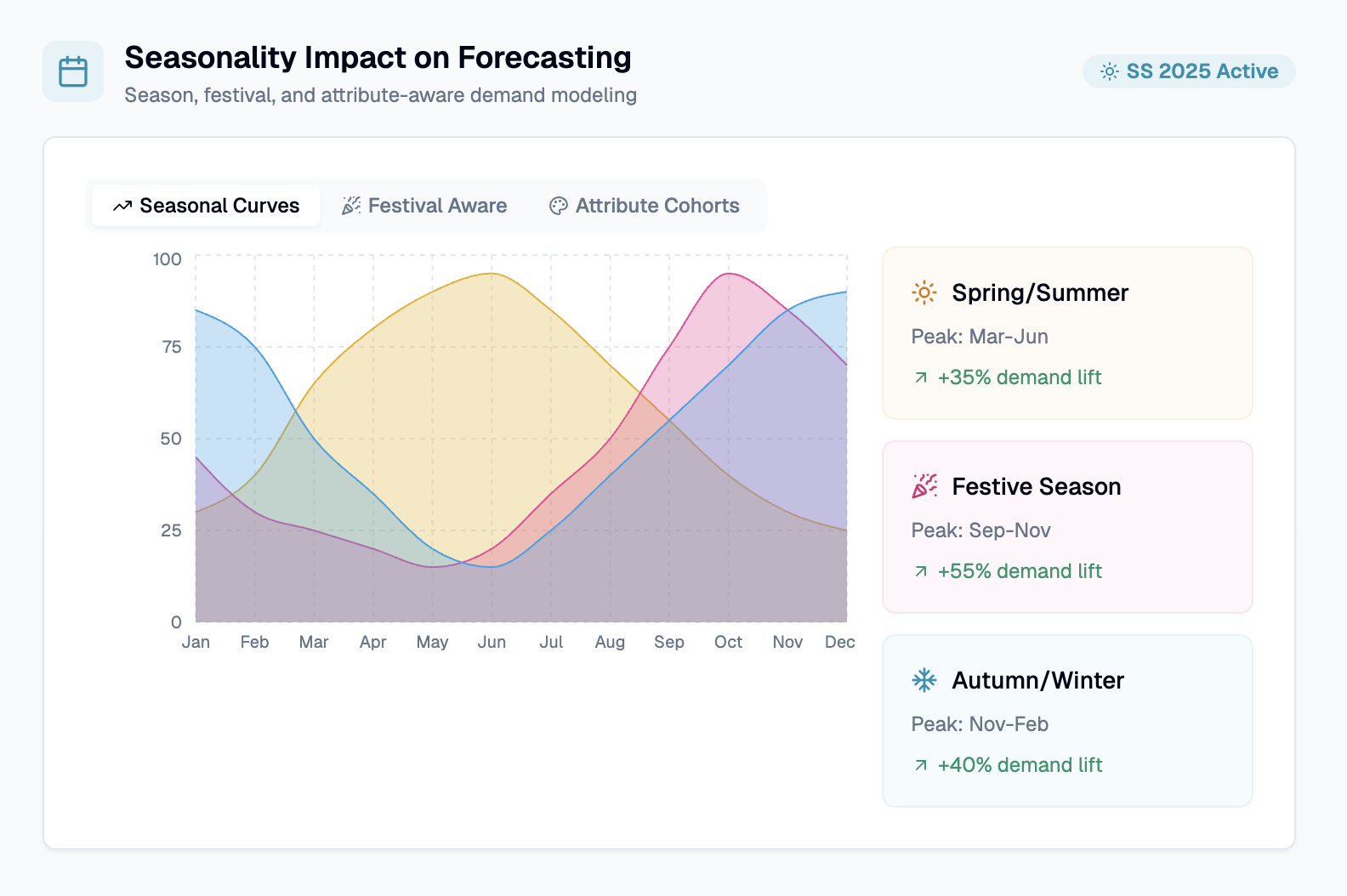
See Reorder Qty with and without seasonality side by side—no forced assumptions, full visibility of impact.
For fashion brands, the system groups by attributes like category, color, and print, and learns patterns from similar calendar windows over the past 2 years.
If demand spikes, the system factors it in—and auto-normalizes reorders for Feb–March (post-promotion periods).
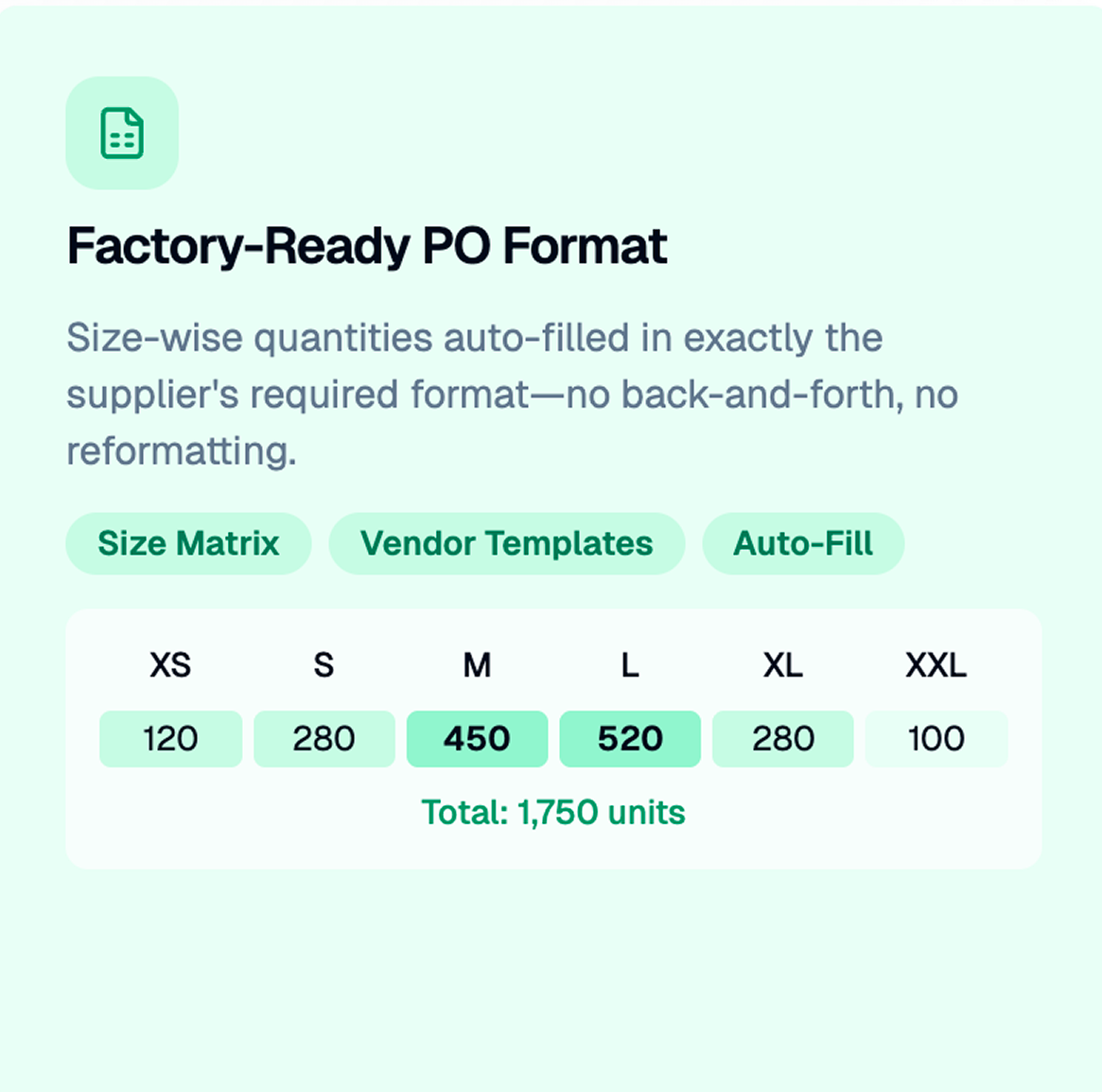
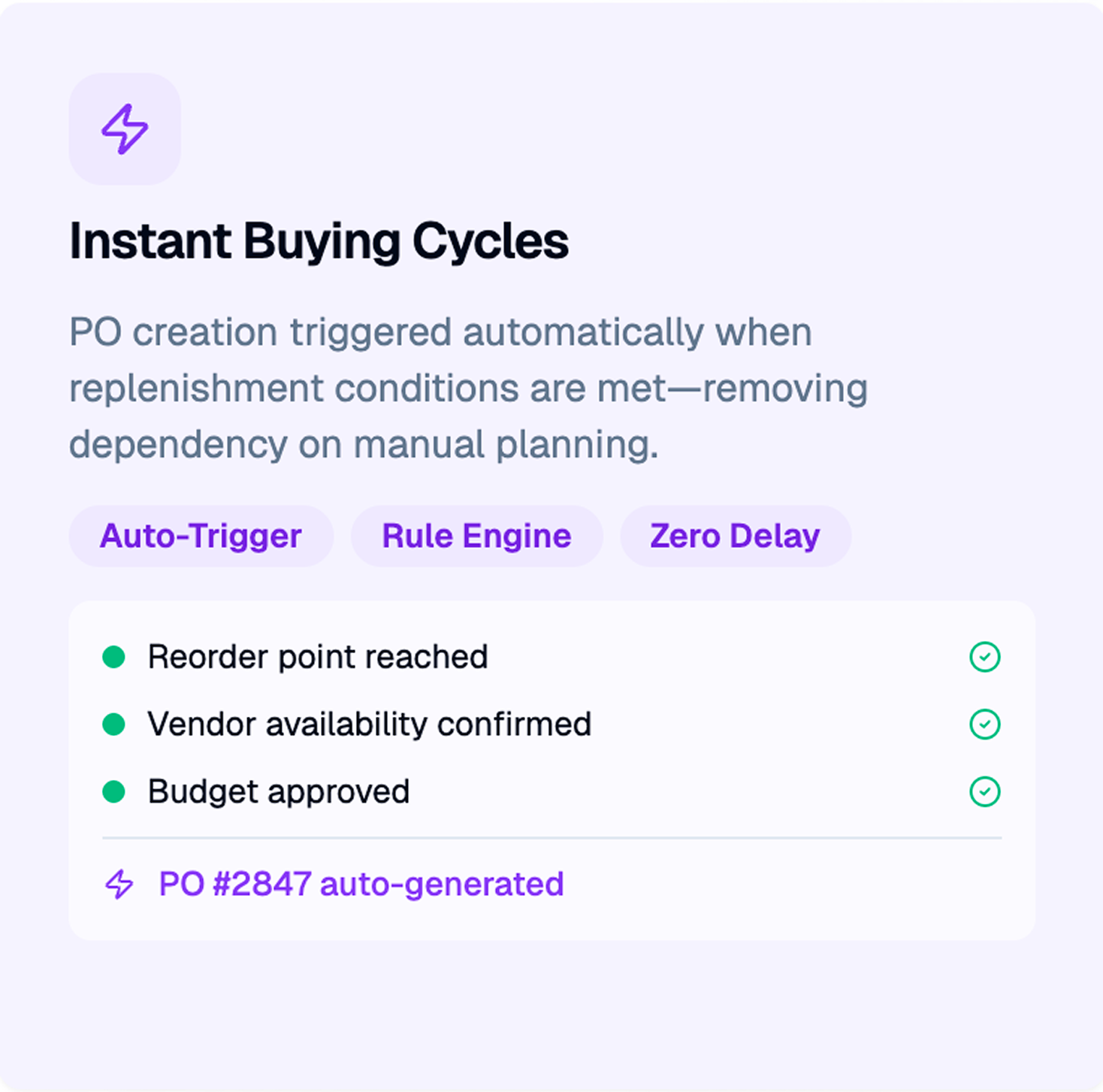
Track Vendor POs,
Dispatches & GRNs Seamlessly
Built for fashion operations — Vendor-wise, Style-wise & Size-wise.
Everything You Need to Control Inventory Across All Locations
Real-time visibility, accurate stock data, and automated control across every warehouse, store, and fulfillment point—so your team always knows what’s available and where
Maintain a unified inventory ledger that records every movement—receipts, transfers, returns, adjustments—across all locations. This eliminates discrepancies and ensures teams always work with accurate, audit-ready data
Run automated cycle counts by SKU, location, or category. Improve stock accuracy with fewer manual checks and quickly identify discrepancies before they impact fulfillment.
Fulfill orders from the most optimal location using rules for proximity, stock availability, and priority. Improve delivery speed while reducing shipping and operational costs.
Set dynamic safety stock thresholds for each warehouse or store based on demand patterns, lead times, and service levels. Prevent stockouts without inflating holding costs.
Create, approve, and track transfer orders between warehouses and stores with complete visibility into in-transit quantities. Reduce delays and rebalance inventory faster.
Sync inventory across online channels, POS systems, and marketplaces from one centralized hub. Reduce overselling, prevent stockouts, and ensure customers see accurate availability everywhere.
