

Demand Forecast Accuracy: Metrics, Tools & Industry Benchmarks


Running out of stock can mean lost sales. Overstocking ties up your cash. The solution? Smart inventory replenishment.
This blog breaks down the inventory replenishment formula—a simple method to help you know when and how much to reorder. Whether you manage a store, warehouse, or online shop, this formula helps you avoid stockouts, cut costs, and keep customers happy.
Let’s dive in.
Inventory replenishment is the process of restocking products to maintain the right balance—enough to meet demand, but not so much that you’re overstocked.
It helps:
Done right, replenishment is based on real data like sales trends and supplier lead times—not guesswork. In the next section, we’ll show you the formula that makes it all work.
To avoid stockouts and overstocking, you need to replenish inventory based on actual usage and lead times—not just intuition. That’s where the inventory replenishment formula comes in.
How to calculate Inventory replenishment quantity:
Replenishment Quantity = (Average Daily Usage × Lead Time) + Safety Stock – Current Inventory
Let’s break it down step by step:
This is the average number of units you sell per day. It’s calculated using recent sales data—usually over the past 30, 60, or 90 days depending on your business cycle.
Why it matters:
It reflects your demand. If you underestimate this, you risk stockouts. If you overestimate, you might order more than you need.
Example:
Over the last 30 days, your store sold 900 pairs of jeans.
Average Daily Usage = 900 ÷ 30 = 30 pairs/day
This figure helps you forecast how many items you’ll likely need during your supplier’s lead time.
Lead time is the number of days between placing an order and receiving the goods. This includes processing, production (if applicable), shipping, and internal receiving time.
Why it matters:
If you don’t account for lead time accurately, your inventory might run out before the new stock arrives.
Example:
Your supplier typically takes 10 days to deliver new jeans from the date of order.
In fashion, lead times can vary greatly, especially if you're ordering from overseas or working with small batch manufacturers.
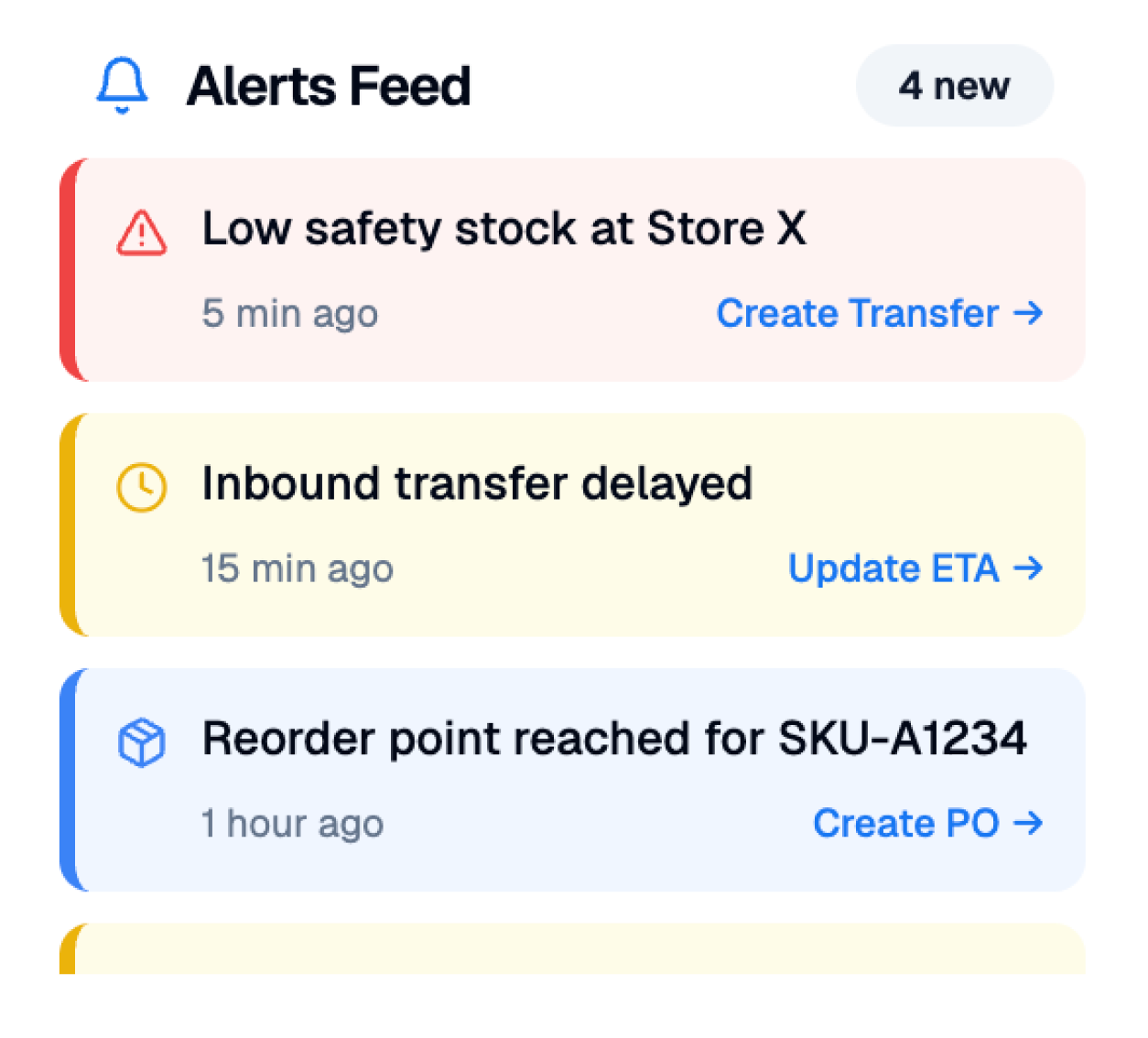
Avoid Stockouts surplus with —
Real-Time alerts & smarter forecasts.

Safety stock is a buffer inventory that protects against variability—like a sudden spike in sales, a late delivery, or a supply chain disruption.
Why it matters:
It’s your insurance against surprises. Without it, even a slight delay or unexpected demand could lead to stockouts.
Example:
To stay safe during promotions or unpredictable demand surges, you decide to keep 100 pairs of jeans as safety stock.
This is especially important in fashion where demand can be highly seasonal and trend-driven.
This is the amount of stock currently on your shelves or in your warehouse. It’s important to have an accurate, real-time count before making replenishment decisions.
Why it matters:
Overlooking existing stock can lead to over-ordering, causing storage issues or markdowns if items go out of fashion.
Example:
You have 120 pairs of jeans in stock right now, ready to sell.
In a fast-paced fashion environment, where styles and sizes rotate frequently, tracking current stock closely helps avoid waste and deadstock.
Replenishment Quantity = (30 × 10) + 100 – 120
Replenishment Quantity = 300 + 100 – 120 = 280 pairs of jeans
This means you should reorder 280 pairs to maintain smooth operations without overstocking.
Let’s say you're preparing for a seasonal denim sale in your boutique. You know from past years that sales pick up before summer, so you increase your average daily usage and safety stock estimates to reflect that.
Using this formula allows you to adjust for seasonality, supplier lead times, and inventory already on hand—ensuring you’re well-stocked without guessing.
This formula is especially helpful in fast-moving sectors like fashion, where trends shift quickly and inventory must be tightly controlled.
Let’s break down how to use the inventory replenishment formula with a real-world example. This will give you a clear idea of how the math connects to business decisions—especially in retail sectors like fashion, where timing and trends are everything.
You manage inventory for a boutique that sees a spike in summer dress sales between May and July. Last year, you sold out too quickly during a holiday weekend. This year, you're planning ahead with data in hand.
You're trying to determine how many summer dresses to reorder so you’re fully stocked but not overstocked.
Here’s the information you pull from your POS and supplier system:
Replenishment Quantity = (Average Daily Usage × Lead Time) + Safety Stock – Current Inventory
Now let’s plug in the numbers:
Replenishment Quantity = (20 × 12) + 80 – 50
= 240 + 80 – 50 = 270 dresses
You need to place an order for 270 dresses today. Here's why:
Mastering inventory replenishment isn’t just about avoiding stockouts—it’s about building a smarter, leaner, and more responsive business.
By using the replenishment formula:
(Average Daily Usage × Lead Time) + Safety Stock – Current Inventory
…you gain a reliable method to plan restocks based on data, not gut feelings. Whether you’re managing a fashion boutique or an e-commerce store, this approach helps you stay in control of your inventory, reduce costs, and serve customers better.
But formulas are only part of the story. Real-world factors like seasonality, supplier reliability, and storage limits should shape your final decisions.
The key takeaway? Use the formula as your foundation—but stay flexible. Inventory management is both a science and a strategy.
Avoid Stockouts surplus with —
Real-Time alerts & smarter forecasts.

No credit/debit card required • Cancel anytime
.png)

.png)
.png)

.png)
